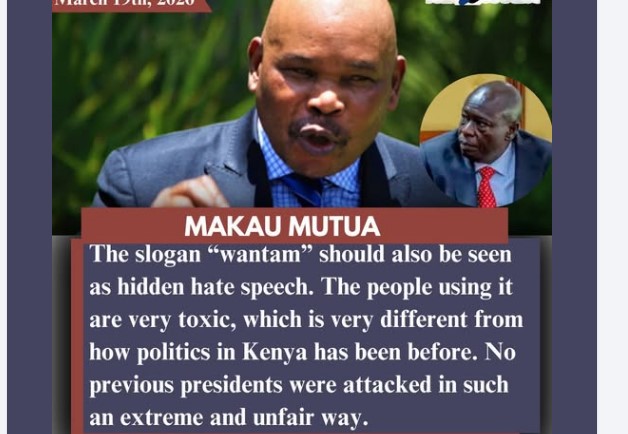
Renowned constitutional lawyer and political commentator Makau Mutua has sparked debate after criticizing the popular political slogan “wantam,” terming it as a form of hidden hate speech.
In his remarks, Mutua argued that the slogan, which has been widely used in political circles, carries undertones that go beyond normal political criticism. According to him, the individuals pushing the phrase are contributing to a toxic political environment that risks undermining healthy democratic engagement.
He further pointed out that Kenya’s political landscape, despite its long history of rivalry, has rarely witnessed what he described as such intense and personalized attacks against a sitting president. Mutua suggested that the current tone of discourse marks a shift from past political traditions, where criticism, though present, was more restrained.
The comments have drawn mixed reactions from the public. Supporters of Mutua’s view agree that political language in the country has become increasingly aggressive and divisive, calling for a return to respectful and issue-based debates. On the other hand, critics argue that slogans like “wantam” are part of free political expression and reflect public sentiment, especially in a democratic society where leaders are subject to scrutiny.
The discussion highlights the growing concern over the nature of political communication in Kenya, particularly as the country gradually moves toward future electoral contests. Analysts warn that unchecked rhetoric—whether from leaders or citizens—could deepen divisions and distract from key national issues such as economic growth, governance, and service delivery.
As the conversation unfolds, Mutua’s remarks have added weight to ongoing calls for more responsible political engagement, with many urging leaders and supporters alike to strike a balance between criticism and respect in the public arena.