
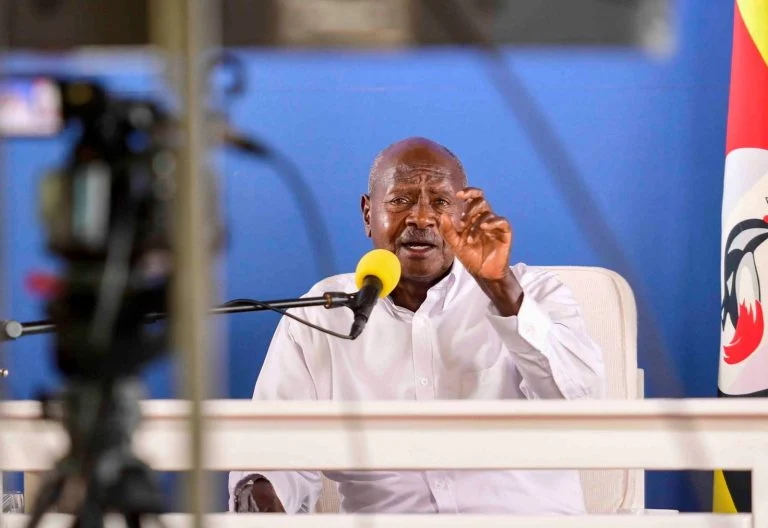
Ugandan President Yoweri Museveni has revealed that a Kenyan senator alerted him to the high cost of Uganda’s petroleum imports, prompting his government to review how the country purchases fuel.
Museveni made the revelation on Thursday, September 17, 2026, while presiding over the groundbreaking ceremony for a new 320-million-litre fuel storage terminal in Mpigi District.
According to Museveni, the senator informed him that Uganda was buying petroleum products through intermediaries in Kenya instead of dealing directly with major suppliers and refineries. The information prompted him to intervene in Uganda’s fuel procurement system.
Museveni said the changes that followed resulted in lower premiums on several petroleum products.
He stated that the cost of diesel fell from US$118 to US$83 per metric tonne, while petrol costs dropped from US$97.50 to US$61.50 per metric tonne.
The cost of aviation fuel also declined, according to Museveni, from US$114.25 to US$79.25 per metric tonne.
The Ugandan president did not disclose the name of the Kenyan senator who brought the issue to his attention.
Following the intervention, Uganda changed its approach to fuel procurement, giving the Uganda National Oil Company (UNOC) a bigger role in importing petroleum products and supplying oil marketing companies.
Museveni has argued that buying fuel directly from bulk suppliers and refineries allows Uganda to negotiate better prices and reduce the additional costs associated with intermediaries.
The development comes as Uganda works to strengthen its petroleum supply chain and prepare for increased domestic oil production.
Museveni also broke ground for the Kampala Storage Terminal, which will have a storage capacity of 320 million litres of refined petroleum products.
The facility is expected to strengthen Uganda’s strategic fuel reserves and help the country respond to supply disruptions and changes in international petroleum markets.