
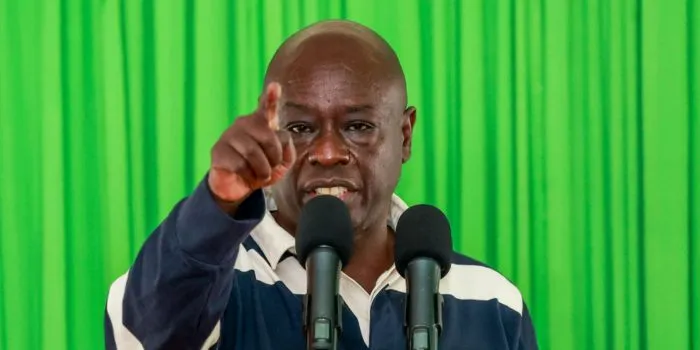
Former Deputy President Rigathi Gachagua has raised concerns over the Independent Electoral and Boundaries Commission’s plan to acquire a new election management system ahead of the 2027 General Election.
Gachagua has questioned IEBC’s decision to consider technology from South Korean firm Miru Systems, alleging that the procurement process could be designed to favour the company.
He claimed that some of the technical requirements in the tender closely match Miru Systems’ capabilities, raising questions about whether other potential suppliers can compete fairly.
Gachagua has challenged IEBC to explain how the tender specifications were developed and what market research was conducted before the procurement process began.
He also questioned the timing of the proposed transition from the existing KIEMS technology, arguing that introducing a new election system less than a year before the 2027 polls could create unnecessary risks.
Another major concern raised by Gachagua involves the transfer of voter information from the existing system to the proposed new technology.
He alleged that the migration could expose the voters’ register to interference if it is carried out too close to the election, although he did not provide publicly verified evidence supporting the claim.
Gachagua has also questioned Miru Systems’ record in other countries and called on IEBC to thoroughly examine the company’s previous work before making any decision.
He has demanded greater transparency from the electoral commission, particularly on the tender specifications, procurement process and safeguards for the voters’ register.
However, IEBC has rejected Gachagua’s allegations, saying that no company has been awarded the election technology tender.
IEBC Chairperson Erastus Edung Ethekon said the procurement process is still ongoing and that the technical requirements were designed to be generic and performance-based rather than favouring a particular supplier.
The commission has maintained that the procurement will follow the required legal procedures and that the voters’ register remains under its custody.
The dispute has now placed the planned election technology upgrade under increased public scrutiny, with the 2027 General Election approaching.
The debate is expected to continue as IEBC proceeds with the procurement process and political leaders demand assurances that the technology used in the next election will be secure, transparent and reliable.