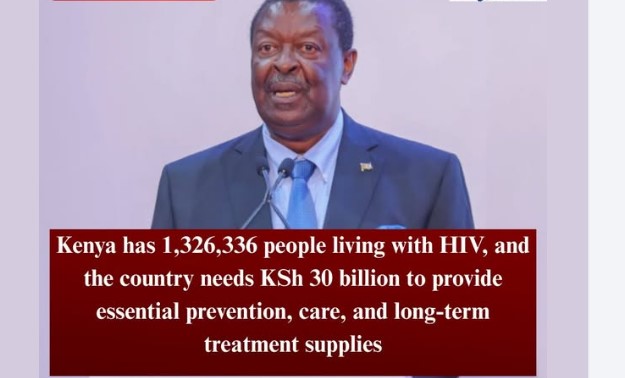
Prime Cabinet Secretary Musalia Mudavadi has raised alarm over the financial burden facing Kenya’s HIV response, revealing that the country currently has 1,326,336 people living with HIV and requires at least KSh 30 billion to sustain essential prevention, care, and long-term treatment.
Speaking during a national health briefing, Mudavadi emphasized that while Kenya has made major progress in reducing new infections and improving access to life-saving antiretroviral therapy, the country’s growing financial gaps threaten to reverse those gains. He noted that a significant share of HIV funding has historically come from international partners, and with global support gradually declining, Kenya must strengthen its domestic financing strategies.
According to Mudavadi, the KSh 30 billion is needed to ensure steady supplies of antiretroviral drugs (ARVs), HIV testing kits, viral load testing services, and prevention tools such as condoms and PrEP medication. He warned that any disruption in funding could jeopardize treatment continuity for hundreds of thousands of Kenyans who rely on daily medication to stay healthy.
Mudavadi called for national solidarity, urging both the government and private sector to invest more in health financing and support ongoing HIV programs. He stressed that safeguarding the health of 1.3 million Kenyans living with HIV is not just a medical responsibility but a national development priority.
Health experts have echoed Mudavadi’s concerns, pointing out that consistent funding is crucial to achieving the long-term goal of ending AIDS as a public health threat by 2030. They added that without stable resources, Kenya risks witnessing a resurgence of new infections, drug resistance, and severe strain on the healthcare system.
Mudavadi reiterated the government’s commitment to protecting vulnerable populations and ensuring that no Kenyan is left behind due to lack of access to essential HIV services. He urged counties, NGOs, and international partners to continue collaborating to keep the progress alive.


